If you have CCTV installed at your business, you might assume the hard part is over.
The cameras are mounted. The monitor is showing live footage. The recording system is switched on.
So, what could possibly go wrong?
Quite a lot, actually.
A CCTV system can be fully operational and still have issues that become apparent during a SIRA CCTV inspection. In many cases, the problem isn’t the camera itself. It comes down to planning, coverage, installation, configuration, documentation or choosing the wrong approach from the beginning.
For businesses in Dubai, identifying these issues early can save time, avoid unnecessary rework and make the inspection process much smoother.
Here are seven common reasons CCTV systems run into problems during inspection—and what businesses can do about them.
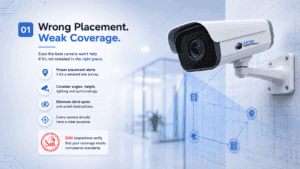
1. Poor CCTV Camera Placement
Where a camera is installed can be just as important as the camera itself.
A high-resolution camera won’t be very useful if it is facing the wrong direction, mounted at an ineffective height or partially blocked by signage, shelves, doors or other objects.
Lighting can create another problem. Direct sunlight, reflections and changing light conditions can affect what the camera actually captures.
How to avoid it
CCTV installation should begin with a proper site survey, not simply a list of cameras.
The installer should assess:
- Entrances and exits
- Reception and access points
- Corridors and important internal areas
- Parking and external areas where applicable
- Potential blind spots
- Lighting conditions
- Camera viewing angles
- Physical obstructions
The objective is simple: every camera should have a clear purpose.
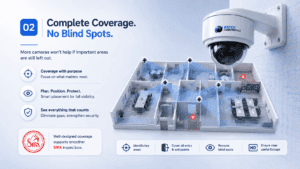
2. Insufficient CCTV Coverage
More cameras don’t necessarily mean better security.
A business can have a large number of cameras and still have important areas that aren’t properly covered.
This often happens when cameras are added individually without considering how the entire CCTV system works together.
For example, a camera may cover an entrance but fail to provide a useful view of the approach to that entrance. Another camera might cover a corridor while leaving an important junction outside its field of view.
How to avoid it
Before installing a SIRA-compliant CCTV system, businesses should think about coverage as a complete layout.
Ask:
- Which areas are most important to monitor?
- Where could a person enter or leave without being clearly captured?
- Are there blind spots between cameras?
- Does furniture or equipment obstruct the view?
- Does the camera provide the level of detail required for its location?
Good CCTV design is about useful coverage—not simply camera quantity.
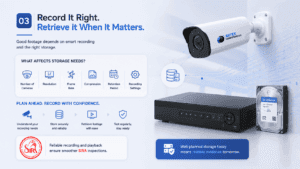
3. Poor Recording and Storage Planning
One of the most overlooked parts of CCTV planning is what happens to the footage after it has been captured.
Businesses often spend time comparing camera specifications but don’t give the same attention to the recording and storage system.
The amount of storage required can depend on factors such as:
- Number of cameras
- Resolution
- Frame rate
- Compression
- Recording mode
- Recording settings
- Required retention period
If storage isn’t properly planned, businesses may face problems when trying to retrieve older footage.
How to avoid it
Before choosing a CCTV system, understand how the complete recording solution will work.
Your installer should be able to explain:
How many cameras will record?
At what quality?
How will footage be stored?
How will recorded footage be retrieved?
Has the recording system been tested?
A good CCTV installation doesn’t stop when the live image appears on the screen. Recording and playback need to work reliably too.
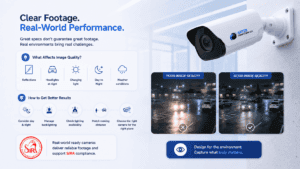
4. Poor Image Quality in Real-World Conditions
A camera can look impressive on a specification sheet and still produce disappointing footage.
Why?
Because real environments are complicated.
A camera installed near a glass entrance may deal with reflections. A parking-area camera may face vehicle headlights at night. An entrance can look completely different during the day compared with after business hours.
How to avoid it
Don’t choose CCTV cameras based solely on megapixels.
The installer should consider:
- Day and night conditions
- Available lighting
- Backlighting
- Glare and reflections
- Viewing distance
- Camera position
- The level of detail required
A camera designed for a well-lit office may not be the right choice for a warehouse entrance or outdoor parking area.
Good CCTV design considers how the camera will perform in the real environment—not just how it looks in a product brochure.
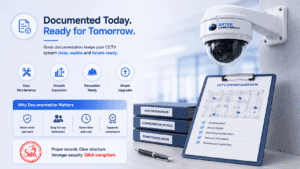
5. Missing or Incomplete CCTV Documentation
The physical installation is only one part of a professional CCTV project.
Documentation is important because businesses need to understand what has actually been installed and how the system is structured.
This becomes particularly useful when:
- A camera needs to be replaced
- The business expands
- The premises are renovated
- The CCTV system needs to be upgraded
- Another technician needs to work on the system
How to avoid it
Before choosing a SIRA approved CCTV company in Dubai, ask what documentation and handover information will be provided after installation.
A professional project should have clear records relating to the installed system and its configuration.
Don’t wait until something goes wrong to discover that nobody knows exactly how your CCTV system was set up.
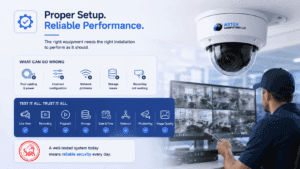
6. Improper Installation or Configuration
Sometimes the equipment is perfectly capable of doing the job—but the installation isn’t.
Poor cabling, unstable power, incorrect configuration, network problems or improperly configured recording settings can all affect system reliability.
And some issues aren’t obvious when you simply look at the live camera feed.
A camera may display video while recording isn’t functioning as expected. A storage issue may go unnoticed until someone needs older footage.
How to avoid it
Once the CCTV installation in Dubai is complete, the entire system should be tested.
This should include checking:
- Live camera feeds
- Recording
- Playback
- Storage
- Date and time
- Network connectivity
- Camera positioning
- Image quality
The important thing is to test the system as a complete security solution, not just confirm that every camera turns on.
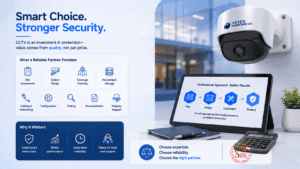
7. Choosing a CCTV Contractor Based Only on Price
Price is naturally an important consideration when installing CCTV.
But the lowest quotation doesn’t necessarily represent the lowest overall cost.
A professional CCTV project involves much more than supplying and mounting cameras.
It involves:
- Site assessment
- System design
- Camera selection
- Coverage planning
- Cabling
- Networking
- Recording and storage
- Configuration
- Testing
- Documentation
- Ongoing support
If the initial installation isn’t planned properly, the business may eventually pay more for additional cameras, repositioning, replacement equipment or corrective work.
How to avoid it
Before choosing a CCTV installation company, ask:
Will you conduct a site survey?
How will you determine camera locations?
How will the recording system be designed?
Will the complete system be tested?
What documentation will be provided?
What happens if the system needs modification later?
A reliable CCTV partner should be able to explain the reasoning behind the proposed system—not simply provide a price.
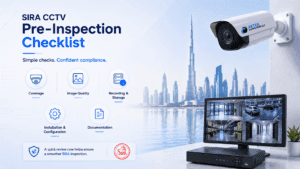
SIRA CCTV Pre-Inspection Checklist for Dubai Businesses
If your business is preparing for a SIRA CCTV inspection, reviewing the system beforehand can help identify potential problems.
Camera Coverage
- Are important areas properly covered?
- Are there obvious blind spots?
- Are cameras obstructed?
- Are the viewing angles still appropriate?
- Has the business layout changed since installation?
Image Quality
- Is footage clear during the day?
- Is it usable in low-light conditions?
- Are glare or reflections affecting important cameras?
- Can the cameras capture the required level of detail?
Recording & Storage
- Are all cameras recording?
- Can recorded footage be retrieved?
- Is the storage system functioning properly?
- Are date and time settings accurate?
- Has playback been tested?
Installation & Configuration
- Are cameras securely installed?
- Is the cabling properly managed?
- Is the network stable?
- Has the system been tested after installation?
- Are there any cameras showing intermittent connectivity?
Documentation
- Is relevant system information available?
- Are installation details documented?
- Is there a clear record of the installed equipment?
- Can the installer provide support if changes are required?
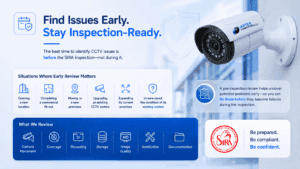
Don’t Wait Until the SIRA Inspection to Find the Problem
The best time to identify a CCTV problem is before the inspection—not during it.
This is especially important if your business is:
- Opening a new location
- Completing a commercial fit-out
- Moving to a new premises
- Upgrading an existing CCTV system
- Expanding its current premises
- Unsure about the condition of its existing security system
A pre-inspection review can help identify potential issues with camera placement, coverage, recording, storage, image quality, installation and documentation.
It can also give business owners a much clearer picture of what needs attention before the inspection process begins.
Need a SIRA CCTV Assessment in Dubai?
A reliable CCTV system starts with proper planning.
Artek Computers helps businesses in Dubai with CCTV system planning, installation, configuration, assessment and ongoing support, with compliance requirements considered as part of the project.
If you’re preparing for a SIRA CCTV inspection or you’re not sure whether your existing system is ready, getting it assessed beforehand can help you identify potential gaps before they become a bigger problem.
Request a CCTV Compliance Assessment
Check your system before the inspection, not after.
Frequently Asked Questions
What is a SIRA CCTV inspection?
A SIRA CCTV inspection is part of the security compliance process for applicable establishments in Dubai. Businesses should ensure that their CCTV system has been properly planned, installed and maintained according to the applicable requirements.
What can cause problems during a SIRA CCTV inspection?
Potential issues can include inadequate coverage, poor camera positioning, image-quality problems, recording or storage issues, installation problems and incomplete system documentation.
Should CCTV be installed before a business fit-out is completed?
CCTV planning is generally better handled during the fit-out planning stage rather than as an afterthought. This allows camera locations, cabling, power and networking to be considered alongside the rest of the infrastructure.
Can an existing CCTV system be assessed before inspection?
Yes. A professional assessment can help identify potential coverage, equipment, recording, installation and configuration issues before an inspection.
How do I choose a SIRA CCTV company in Dubai?
Look beyond the equipment price. Consider the company’s ability to conduct a proper site survey, design the system, handle installation and configuration, provide appropriate documentation, test the completed system and provide ongoing support.