In today’s world, security is not just a luxury but a fundamental necessity for residential and commercial properties. Whether you’re a property developer, facility manager, or homeowner association board member, understanding the comprehensive security requirements for important complexes is essential for compliance and the safety of residents and visitors.
This detailed guide walks you through Chapter Four’s security conditions and requirements, covering everything from VSS camera installations to ANPR systems and mandatory security personnel requirements.
Understanding Security Requirements for Important Complexes
Important complexes are defined as any group of residential or office units, including buildings, towers, and villa complexes. These properties must meet specific security standards that vary based on the type of establishment and the number of residential units.
The security framework is divided into distinct categories, each with tailored requirements to ensure comprehensive protection while remaining practical for implementation.
Multi-Story Residential Building Security Requirements
Multi-story residential buildings used exclusively for residential purposes have specific security camera installation requirements that must be strictly followed.
VSS Camera Placement Requirements
Video Surveillance Systems must be strategically installed throughout the building to provide comprehensive coverage. Here’s what you need to know about each location:
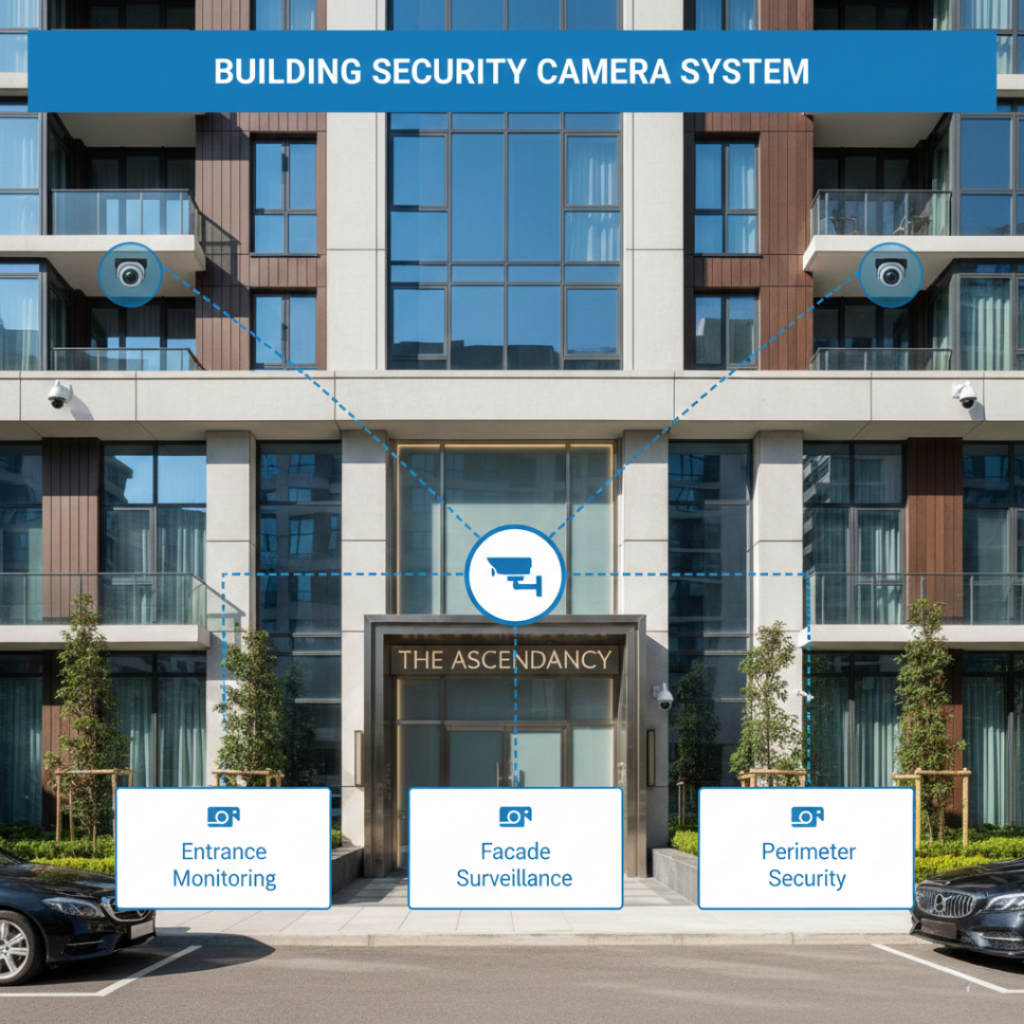
Entrance Security: Cameras at establishment entrances must provide identification view capability. This means the camera quality and positioning should allow for clear facial recognition of individuals entering the premises. The identification view is the highest standard of camera clarity required.
Reception Areas: Reception desks require recognition view cameras. These cameras should capture sufficient detail to recognize individuals but don’t need the same level of detail as identification cameras.
Common Areas: Elevator lobbies and stairs require observation view cameras, providing general monitoring of these transitional spaces. The focus here is on overall activity rather than detailed identification.
Elevator Interiors: Inside elevators, observation view cameras must be installed with a specific angle that clearly shows the floor number. This feature is crucial for tracking movement throughout the building and provides critical information during security investigations.
Corridors and Pathways: Establishment corridors need detection view cameras, which monitor movement and activity without requiring detailed facial recognition. This level of surveillance is appropriate for interior pathways where general monitoring suffices.
Recreational Facilities: Health club entrances require recognition view cameras, while swimming pools need monitoring view capability. These areas balance privacy concerns with security needs.
Parking Areas: Parking lots and pathways must have detection view cameras to monitor vehicle and pedestrian traffic.
Perimeter Security: External cameras must be installed around the building’s perimeter with monitoring view capability. These cameras should be mounted on the building’s exterior walls to provide comprehensive coverage of the surrounding area.
Garden and Perimeter Security Requirements
The complex’s gardens and outdoor spaces require their own security infrastructure:
Establishment Entrances: Gardens must have identification view cameras at all entry points, ensuring the same level of security as building entrances.
Vehicle Access Points: All vehicle entrances and exits require recognition view cameras to capture license plates and vehicle occupants clearly.
Common Garden Areas: Establishment corridors within garden spaces need detection view coverage.
Seating Areas: Outdoor seating areas require detection view cameras to monitor activity while respecting privacy in recreational spaces.
Event Spaces: Outdoor areas, performance venues, and visitor gathering spaces must have monitoring view cameras installed.
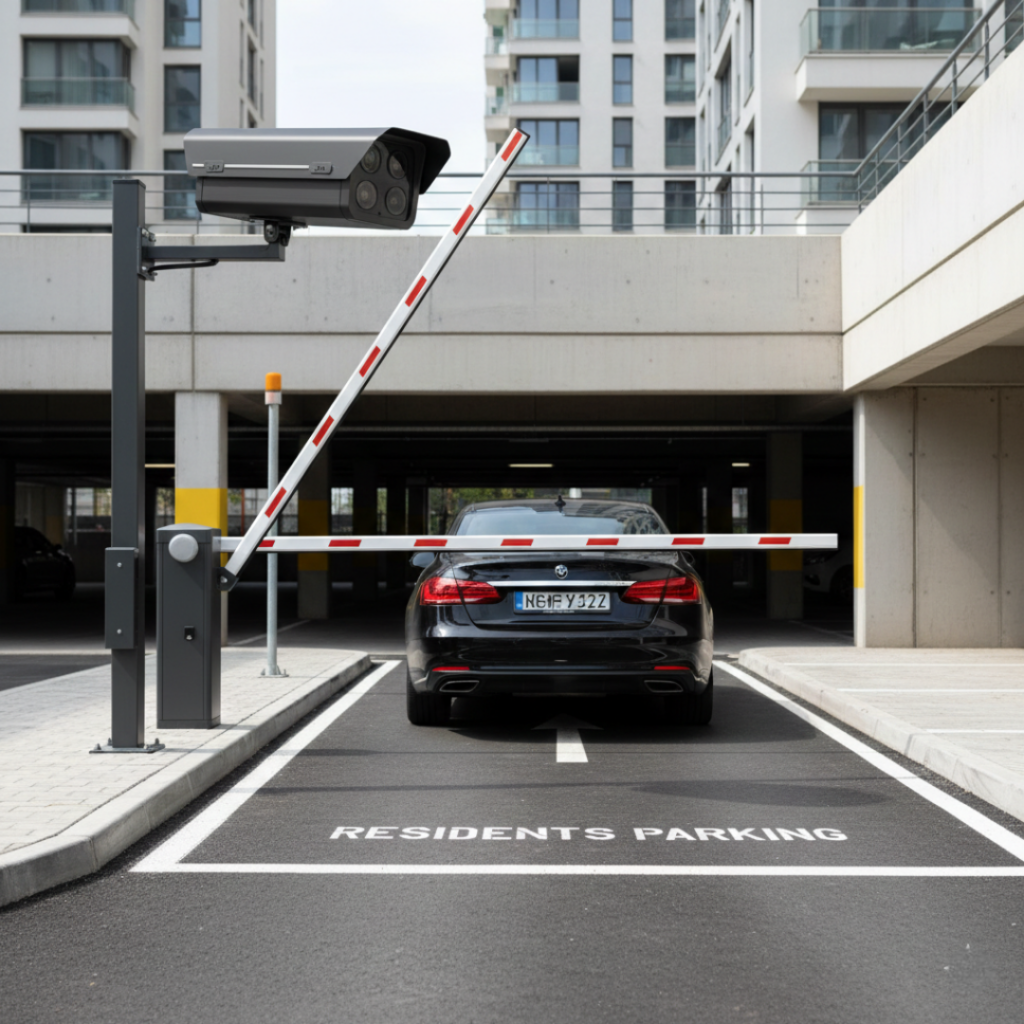
Vehicle Number-Plate Recognition Systems (ANPR)
Automatic Number-Plate Recognition systems represent a critical component of modern residential security infrastructure. These specialized cameras use advanced technology to automatically read and record vehicle license plates.
When ANPR is Required
ANPR systems must be installed at the entrances and exits of parking spaces under specific conditions. If parking spaces are used exclusively by residents and not by any residential units used as vacation homes, standard vehicle number-plate recognition cameras are sufficient.
However, there’s an important distinction to understand. If the parking spaces are used by visitors or if any units are used as holiday homes, SIRA-approved Automatic Number-Plate Recognition systems become mandatory. This requirement ensures that all vehicle movements are properly documented, providing an additional layer of security for properties with higher traffic volumes.
The ANPR cameras must be positioned to capture clear images of license plates as vehicles enter and exit, regardless of lighting conditions or vehicle speed.
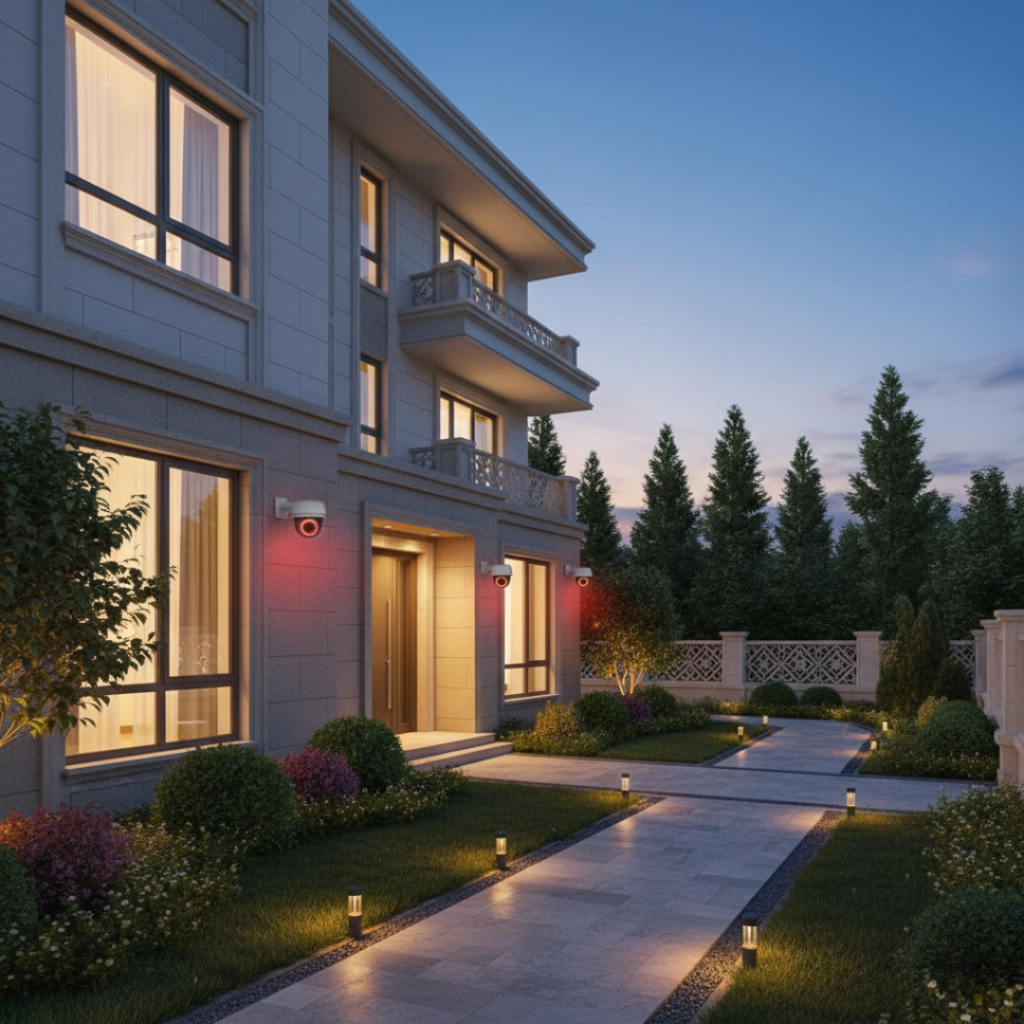
Additional Security Requirements for Residential Buildings
Beyond camera systems, residential complexes must implement several other security measures depending on their size and configuration.
Security Guard Requirements
Security personnel requirements are scaled based on building size. For buildings with fewer than 50 residential units, providing a security guard or watchman around the clock is optional. Property management can assess the risk level and make informed decisions about staffing.
However, for buildings with 50 or more residential units, having a security guard or watchman present 24/7 becomes mandatory. This requirement recognizes that larger properties face increased security challenges and require constant human oversight.
Workspace Provisions
When security guards are employed, proper facilities must be provided. If a security guard is used, a dedicated restroom must be available for the guard’s use. If a watchman is employed instead, a suitable and fully equipped living room must be provided. These requirements ensure that security personnel can perform their duties effectively while maintaining reasonable working conditions.
Access Control Systems
Access control is another critical requirement that varies by building size. For buildings containing fewer than 50 residential units, installing an access control system is mandatory. This system must control entry to the building and prevent unauthorized entry until permission is granted by the concerned residents.
For buildings containing 50 residential units or more, access control systems become optional. This might seem counterintuitive, but larger buildings often have full-time security staff who manage access, potentially making automated systems redundant.
Health Monitoring Services
All residential complexes must install SIRA-approved system health monitoring services. These services ensure that security systems remain operational and can alert property management to any technical failures or tampering.
Commercial Building Security Standards
Multi-story commercial buildings have their own set of security requirements that reflect the different risk profile and usage patterns of commercial properties.
VSS Requirements for Commercial Properties
Commercial establishments require cameras at multiple locations. Main entrances need identification view cameras at both the primary establishment entrance and at entrances to shops within the building. Main lobby areas require detection view cameras for general monitoring.
Elevator areas follow similar patterns to residential buildings, with observation view cameras in lobbies and stairs, and observation view cameras inside elevators showing floor numbers. Reception desks need recognition view cameras.
Emergency exits are particularly important in commercial settings. Emergency exit doors among floors must have observation view cameras to monitor these critical safety points.
Commercial buildings also need establishment corridor cameras with detection view capability, health club entrance cameras with recognition view, swimming pool cameras with monitoring view, and parking lot pathway cameras with detection view.
External perimeter cameras with monitoring view must be installed on the building’s walls, just as with residential properties.
Commercial Garden Security
Commercial property gardens require identification view cameras at establishment entrances, recognition view cameras at vehicle entrances and exits, detection view cameras in establishment corridors and seating areas, and monitoring view cameras in outdoor areas, performance venues, and visitor gathering spaces.
Commercial ANPR Systems
Commercial properties must install Automatic Number-Plate Recognition cameras with ANPR recognition system capability at vehicle entrance and exit points.
Additional Commercial Security Requirements
Commercial buildings must provide security guards or watchmen around the clock, with appropriate workspace facilities. They must also install SIRA-approved system health monitoring services to ensure continuous security system operation.
Villa Complex Security Specifications
Villa complexes, defined as any group of residential villas, have requirements tailored to their unique layout and security needs.
Villa Complex Camera Requirements
Establishment entrances require identification view cameras. Elevator lobbies and stairs in public areas need observation view cameras. The main lobby area requires detection view cameras, while reception desks need recognition view cameras.
Inside elevators in public areas, observation view cameras must be installed showing floor numbers. Internal street intersections require detection view cameras to monitor traffic flow within the complex.
Health club entrances need recognition view cameras, and swimming pools require monitoring view cameras.
Perimeter and Internal Security
The fence surrounding the site requires monitoring view cameras. Installing cameras to cover internal streets is optional but recommended. The remarks specify that cameras on the perimeter fence are optional, but if installed, they should cover internal streets. Similarly, cameras on internal streets are optional but should be installed on the fence surrounding the site if implemented.
This flexibility recognizes that villa complexes may have different layouts and security priorities compared to high-rise buildings.
Villa Complex Additional Requirements
Villa complexes must provide security guards or watchmen around the clock, with appropriate facilities. They must also install SIRA-approved system health monitoring services.
Understanding Camera View Types
To implement these requirements effectively, it’s crucial to understand the four types of camera views referenced throughout the regulations:
Identification View: The highest quality requirement, allowing for clear identification of individuals’ faces. Used at main entrances and critical access points.
Recognition View: Allows recognition of known individuals but may not provide sufficient detail for positive identification of unknown persons. Used at reception desks, health clubs, and vehicle access points.
Detection View: Provides general monitoring and can detect movement and activity but does not provide facial detail. Used in corridors, pathways, and parking areas.
Monitoring View: Provides overview surveillance of areas, focusing on general activity rather than individual identification. Used for perimeter security, pools, and outdoor gathering spaces.
Compliance Checklist for Property Managers
To ensure your property meets all security requirements, use this comprehensive checklist:
Assessment Phase: Determine your property type (multi-story residential, commercial, or villa complex). Count the number of residential units to determine which requirements apply. Identify all areas requiring camera coverage based on your property type.
Camera Installation Phase: Install identification view cameras at all main entrances. Install recognition view cameras at reception desks, health clubs, and vehicle entry/exit points. Install observation view cameras in elevator lobbies, stairs, and inside elevators. Install detection view cameras in corridors, pathways, parking areas, and seating areas. Install monitoring view cameras on perimeter walls, at pools, and in outdoor gathering spaces.
ANPR System Phase: Determine if standard vehicle recognition cameras are sufficient or if SIRA-approved ANPR systems are required. Install appropriate systems at all parking area entrances and exits.
Personnel and Access Control Phase: Determine security guard requirements based on unit count. Provide appropriate facilities for security personnel. Install mandatory or optional access control systems as required. Install SIRA-approved health monitoring systems.
Documentation and Compliance: Ensure all systems are SIRA-approved where required. Document all installations with specifications and locations. Train security personnel on system operation. Establish monitoring protocols and emergency response procedures.
Best Practices for Implementation
Beyond meeting minimum requirements, consider these best practices for optimal security:
Integration: Integrate all security systems (cameras, access control, ANPR) into a unified management platform for easier monitoring and faster response times.
Maintenance: Establish regular maintenance schedules for all security equipment. Security systems only work when they’re operational, so preventive maintenance is crucial.
Training: Provide comprehensive training to security personnel and building management on system operation, emergency protocols, and resident privacy protection.
Privacy Balance: While meeting security requirements, respect resident privacy. Avoid camera placement that unnecessarily intrudes on private spaces or activities.
Upgrade Planning: Technology evolves rapidly. Plan for system upgrades and replacements as part of long-term building maintenance.
Resident Communication: Keep residents informed about security measures and how they protect the community. Transparency builds trust and cooperation.
Working with Security System Providers
Choosing the right security system provider is crucial for successful implementation. Look for providers with SIRA certification and approval, experience with your property type, comprehensive service offerings including installation, maintenance, and monitoring, and strong references from similar properties.
At Artek Computer, we specialize in implementing comprehensive security solutions that meet all regulatory requirements while providing user-friendly operation and reliable performance. Our expertise covers VSS camera systems, ANPR installations, access control systems, and integrated security management platforms.
Conclusion
Meeting security requirements for residential and commercial complexes involves careful planning, proper system selection, and ongoing maintenance. Whether you’re managing a small residential building, a large commercial complex, or a villa community, understanding these requirements ensures you provide adequate protection while maintaining compliance.
The investment in proper security infrastructure protects not just property but also the safety and peace of mind of everyone who lives, works, or visits your complex. By following these guidelines and working with experienced security professionals, you can create a secure environment that meets all regulatory standards and provides reliable protection for years to come.
Remember that security requirements may be updated periodically, so stay informed about changes to regulations and advances in security technology that could benefit your property.
Need help implementing security systems for your residential or commercial complex? Contact Artek Computer for expert consultation and SIRA-approved security solutions tailored to your property’s specific requirements.